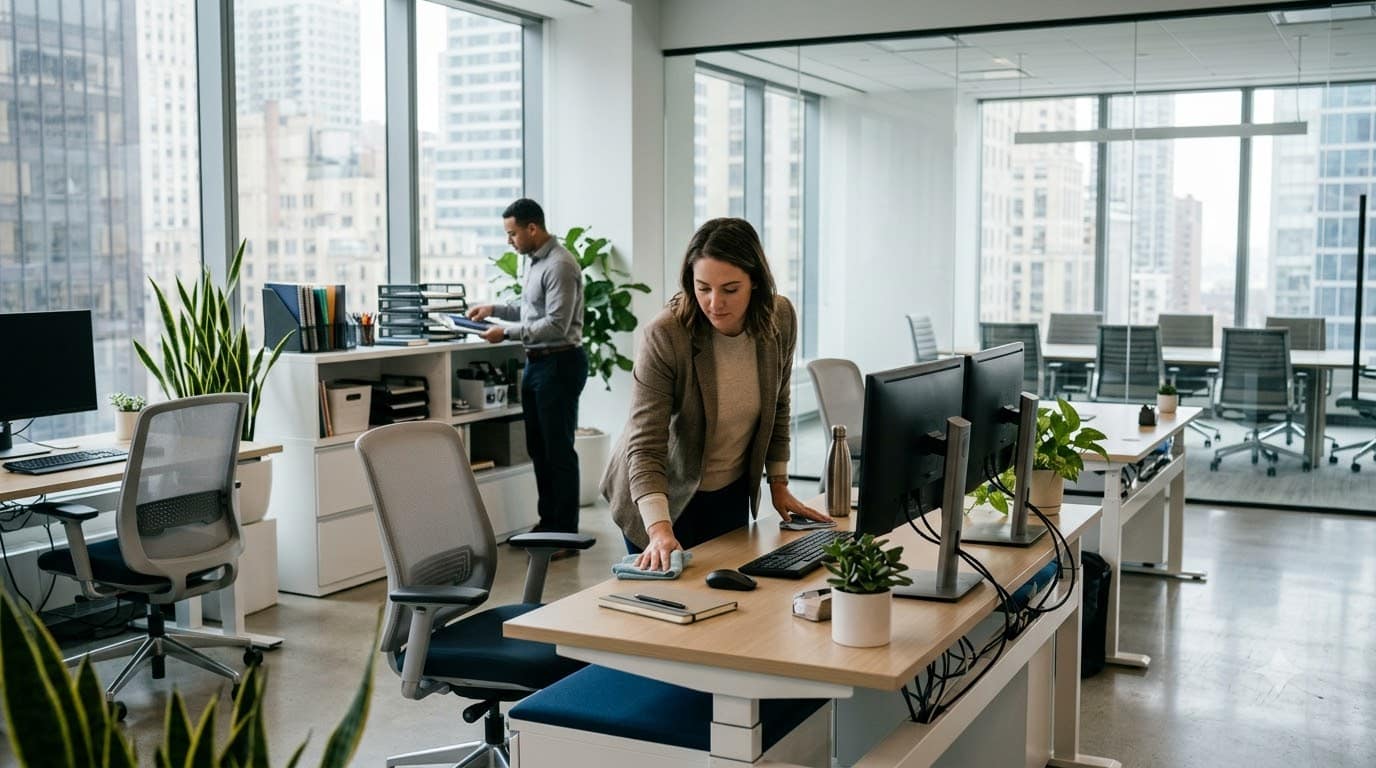
Professional office cleaning helps maintain a clean workplace, but everyday activities can quickly create dust, spills, clutter, and waste between scheduled visits.
Employees use desks, prepare food in shared kitchens, attend meetings, and walk through common areas throughout the day. Without a simple maintenance routine, these spaces can become untidy even when the office receives regular professional cleaning.
The good news is that keeping an office clean between visits does not require complicated procedures. A few consistent habits, clear responsibilities, and attention to frequently used areas can make a noticeable difference.
In this guide, we explain how to keep an office clean between professional cleaning visits and how businesses can build a practical workplace maintenance routine.
Why Is It Important to Maintain an Office Between Cleaning Visits?
Professional cleaning handles the tasks included in the agreed service, but offices continue to be used throughout the workday.
Small issues such as overflowing bins, food crumbs, spills, and clutter can develop between appointments. Addressing them promptly helps keep shared spaces usable and prevents everyday messes from accumulating.
Maintaining an office between visits can help businesses:
- Keep desks and shared workspaces organized.
- Manage food waste and kitchen messes.
- Address spills before they spread.
- Maintain a professional appearance for visitors.
- Keep restrooms and shared facilities usable.
- Make scheduled professional cleaning more efficient.
Employees do not need to perform every cleaning task themselves. The goal is to establish simple habits that complement the professional cleaning schedule.
1. Keep Workstations Clean and Organized
Desks and workstations can quickly collect papers, food wrappers, dust, and everyday clutter.
Encourage employees to spend a few minutes organizing their work areas at the end of the day.
Useful habits include:
- Dispose of rubbish in the appropriate bins.
- Remove used cups, plates, and food containers.
- Keep unnecessary items off shared surfaces.
- Clean up spills promptly using suitable products.
- Organize personal belongings so surfaces can be accessed when needed.
Employees should follow workplace procedures for confidential documents and sensitive equipment. Cleaning staff should not be expected to move personal belongings or handle paperwork without permission.
For shared desks, businesses can establish a simple process for clearing and wiping suitable surfaces between users.
2. Maintain a Clean Office Kitchen
Office kitchens and break rooms often become messy because several employees use the same facilities throughout the day.
Food crumbs, spills, dirty dishes, and overflowing rubbish bins can make the area difficult to maintain.
To keep the kitchen in better condition:
- Wash personal dishes after use.
- Wipe counters after preparing food.
- Clean up spills promptly.
- Store food in designated areas.
- Dispose of food waste properly.
- Avoid leaving dirty dishes in the sink overnight.
- Follow the office process for removing old food from shared refrigerators.
Businesses should clearly explain which kitchen tasks are employees’ responsibility and which are included in the professional cleaning agreement.
A shared kitchen works best when everyone follows the same basic expectations.
3. Deal With Spills and Visible Dirt Promptly
Spills and visible messes should not be left until the next cleaning appointment.
A small drink spill can spread across a floor, while food debris can attract unwanted pests if it is ignored.
Employees should know how to report or address common incidents safely.
For example, use an appropriate cleaning product for the affected surface and follow the manufacturer’s instructions. If a spill involves an unknown substance, broken glass, or a potentially hazardous material, do not attempt to clean it without the proper training and equipment.
Businesses should also have a clear process for reporting issues that require maintenance or specialized attention.
4. Keep Restrooms Usable Between Professional Visits
Restrooms may need attention between scheduled professional cleaning visits, particularly in offices with many employees or visitors.
Employees can help by reporting empty dispensers, visible spills, plumbing issues, or other problems through the designated process.
Businesses may also arrange checks during the day when restroom traffic is high.
Useful practices include:
- Report spills or visible messes promptly.
- Notify the appropriate person when supplies run low.
- Avoid leaving waste outside designated bins.
- Report leaking taps or plumbing problems.
- Follow workplace procedures for restroom maintenance.
Professional restroom cleaning should remain part of the agreed service plan where required. Employee awareness helps identify problems between visits rather than replacing the cleaning service.
5. Manage Office Waste Properly
Waste management is an important part of maintaining a tidy workplace.
Food waste, packaging, paper, and general rubbish can accumulate quickly in shared areas.
To manage office waste more effectively:
- Place waste bins in convenient locations.
- Empty bins according to the workplace schedule.
- Use separate recycling containers where available.
- Avoid allowing food waste to remain in the office overnight.
- Keep waste storage areas organized.
- Report overflowing bins when they need attention.
Businesses should clarify who is responsible for emptying different bins and how often waste should be removed.
A straightforward waste-management process can reduce clutter and make routine cleaning easier.
6. Keep Reception Areas and Meeting Rooms Ready for Use
Reception areas and meeting rooms often influence how clients and visitors perceive a business.
These spaces may be used repeatedly throughout the day, so they benefit from simple maintenance between professional cleaning visits.
Employees can help by:
- Returning chairs to their proper positions.
- Removing used cups and rubbish.
- Keeping tables clear after meetings.
- Reporting visible spills or marks.
- Organizing shared supplies.
- Avoiding unnecessary clutter in reception areas.
For businesses that meet clients frequently, assigning responsibility for checking these spaces can help maintain a more consistent appearance.
7. Establish a Simple End-of-Day Office Routine
An end-of-day routine gives employees a predictable way to leave the office ready for the next workday.
The routine does not need to be lengthy. Focus on small tasks that prevent everyday clutter from building up.
End-of-Day Office Checklist
- Remove food containers and rubbish from desks.
- Take personal dishes to the kitchen.
- Wipe up visible spills.
- Clear shared meeting tables.
- Organize shared workstations.
- Check that kitchen waste is managed properly.
- Report restroom or maintenance issues.
- Leave surfaces accessible for scheduled cleaning.
These tasks should be adapted to the workplace. Employees should not be assigned cleaning duties that require specialized equipment, hazardous-material handling, or work outside their responsibilities.
8. Provide the Right Supplies and Equipment
Employees can only maintain the office effectively when suitable supplies are available.
Depending on the workplace, useful items may include waste bags, paper towels, appropriate surface-cleaning products, and clearly labeled waste bins.
Businesses should consider:
- Where cleaning supplies are stored.
- Who is responsible for restocking them.
- Which products are suitable for different surfaces.
- How supplies should be used and stored safely.
- Which cleaning tasks should be left to professional staff.
Never mix cleaning chemicals, and always follow product labels and workplace safety procedures.
For sensitive surfaces and electronic equipment, use only suitable products and methods.
9. Create Clear Responsibilities for Employees
Office cleanliness should not depend on one person constantly reminding everyone to tidy up.
A simple workplace policy can explain the basic responsibilities of employees, office managers, and professional cleaners.
Employee Responsibilities
Employees can keep personal areas organized, manage their dishes, dispose of rubbish correctly, and report spills or problems.
Office Manager Responsibilities
Office managers can communicate expectations, monitor shared areas, arrange supplies, and coordinate cleaning services.
Professional Cleaning Responsibilities
Professional cleaners handle the tasks included in the service agreement, which may cover floors, accessible surfaces, restrooms, waste removal, and shared areas.
The agreement should identify what is included and which tasks require a separate arrangement.
When responsibilities are clear, employees are less likely to assume that every small mess will automatically be handled during the next professional visit.
10. Build a Cleaning Routine Around Your Office’s Needs
Every workplace has different requirements. A small office with a few employees may need a different maintenance routine from a busy workplace with multiple kitchens, restrooms, and meeting rooms.
When creating your routine, consider:
Employee traffic: More people using shared areas may mean more frequent maintenance.
Office layout: Shared workstations, meeting rooms, and kitchen facilities can require extra attention.
Working hours: Offices that operate for long hours may need a plan for handling messes throughout the day.
Cleaning frequency: The routine should complement the professional cleaning schedule rather than duplicate every task.
Special requirements: Some workplaces may have specific access, equipment, or hygiene procedures that employees must follow.
Review the routine periodically and update it when your office usage changes.
How Professional Office Cleaning Supports Daily Maintenance
Employee habits help maintain a tidy workplace, but they do not replace a professional cleaning plan.
Professional office cleaning can address recurring tasks that require a consistent schedule, suitable equipment, and an agreed scope of work.
Depending on the service, these tasks may include floor maintenance, dusting accessible surfaces, restroom cleaning, and maintaining meeting rooms and shared spaces.
If your office needs a more consistent cleaning routine, explore Galaxy Maids’ office cleaning services in NYC. You can review the service and request a quote based on your office size, preferred schedule, and cleaning requirements.
A clear service agreement helps establish which tasks are handled during each visit and which daily responsibilities remain with employees.
Common Mistakes to Avoid When Maintaining an Office
Expecting Employees to Handle Every Cleaning Task
Employees can help maintain their own work areas, but specialized or extensive cleaning may require professional attention.
Define responsibilities clearly rather than relying on informal expectations.
Ignoring Small Problems
Spills, overflowing bins, and kitchen messes can become larger problems when left unattended.
Encourage employees to report issues promptly and provide a clear process for addressing them.
Using the Wrong Cleaning Products
Some surfaces and electronic devices can be damaged by unsuitable products.
Follow manufacturer instructions and workplace safety procedures.
Assuming Professional Cleaning Covers Everything
The scope of professional cleaning varies by provider and agreement.
Confirm which tasks are included instead of assuming that every area or special request is automatically covered.
Failing to Review the Routine
A maintenance routine may need to change when the office grows, employee attendance changes, or more people begin using shared facilities.
Review the process periodically to ensure it still fits the workplace.
Frequently Asked Questions
1. How can I keep my office clean between professional cleaning visits?
Encourage employees to manage rubbish, clean up spills, keep desks organized, wash their dishes, and report problems promptly. These habits help maintain the workplace between scheduled professional visits.
2. What should employees clean in the office every day?
Depending on workplace policy, employees can organize personal work areas, dispose of rubbish, manage personal dishes, and clean up minor spills safely. Specialized cleaning should be handled by appropriately trained personnel.
3. How do you keep an office kitchen clean?
Ask employees to wash their dishes, wipe counters after use, store food properly, dispose of waste, and clean up spills. Assign responsibility for shared kitchen maintenance so tasks are not overlooked.
4. How can an office manager encourage better cleaning habits?
Set clear expectations, provide suitable supplies, assign responsibilities for shared spaces, and create a simple end-of-day routine. Consistent communication helps employees understand what is expected.
5. Does daily tidying replace professional office cleaning?
No. Daily tidying helps control everyday mess, but professional cleaning may still be needed for floors, restrooms, detailed surface cleaning, and other tasks included in the service plan.
6. How often should a professional office cleaning service visit?
The appropriate frequency depends on office size, employee traffic, shared facilities, and cleaning requirements. Some workplaces need daily service, while others may be adequately maintained with fewer visits.
7. How can I arrange office cleaning services in NYC?
Identify your office size, preferred schedule, cleaning priorities, and any special requirements. Then contact a provider to discuss the scope of work and request a quote.
Final Thoughts
Keeping an office clean between professional cleaning visits comes down to consistent habits, clear responsibilities, and attention to frequently used areas.
Employees can help by maintaining their workstations, managing kitchen messes, disposing of waste properly, and reporting problems promptly. Office managers can support these habits by providing supplies and establishing a straightforward maintenance routine.
Professional cleaning remains important for recurring tasks that require a defined schedule and appropriate equipment.
If your business needs help maintaining a clean and professional workplace, visit Galaxy Maids’ office cleaning service page to learn more and request a quote based on your requirements.


